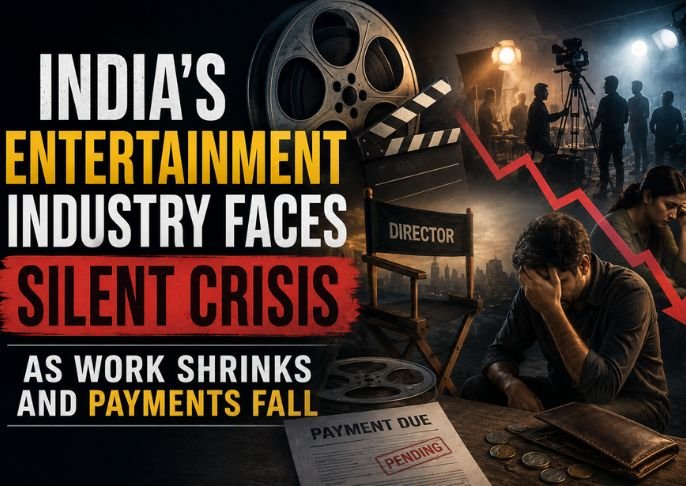
India’s Entertainment Industry Faces a Silent Crisis
Wallpostmedia.com examines how India’s entertainment industry is facing growing concerns as work opportunities shrink, payments become less predictable, and professionals across the sector navigate an increasingly competitive market.
India’s entertainment industry has long been one of the country’s largest creative ecosystems, supporting actors, musicians, dancers, technicians, writers, production crews, editors, makeup artists, photographers, and countless other professionals. While the industry continues to produce films, television programs, streaming content, music, and digital entertainment, many workers face a different reality behind the scenes.
For some professionals, the challenge isn’t a complete lack of production. Instead, it is the combination of fewer opportunities, shorter contracts, delayed payments, and intense competition for available work.
What Is Driving the Crisis?: India’s Entertainment Industry
The India’s entertainment industry has changed significantly in recent years. The growth of streaming platforms initially created optimism that more content would lead to more jobs. However, changing business strategies, tighter production budgets, and evolving audience habits have created new pressures.
Several factors may contribute to the current challenges:
- Reduced production budgets
- Fewer projects in some segments
- Changing streaming strategies
- Increased competition
- Shorter production schedules
- Delayed payments
- Rising operating costs
- Changes in advertising revenue
These pressures can affect both established professionals and newcomers trying to build careers.
Fewer Jobs Can Mean Greater Competition: India’s Entertainment Industry
When the number of available projects declines, competition naturally increases.
A single role, production position, or freelance assignment can attract a large number of applicants. Professionals who previously relied on regular work may find themselves competing for fewer opportunities.
This can be particularly difficult for freelancers and daily-wage workers who don’t have guaranteed monthly incomes.
The Impact of Delayed Payments
One of the biggest concerns for entertainment workers can be payment delays.
Production involves hundreds of people across different departments. When payments are delayed, the effects can extend beyond the individual worker.
Professionals may have to manage:
- Rent
- Household expenses
- Equipment costs
- Travel expenses
- Professional fees
- Loans and other financial commitments
For freelancers, even a short payment delay can create significant cash-flow problems.
Streaming Changed the Entertainment Business: India’s Entertainment Industry
The rise of streaming platforms transformed India’s entertainment industry.
Streaming created demand for original films, series, documentaries, and regional-language content. For several years, this expansion provided new opportunities for writers, actors, directors, technicians, and production companies.
However, streaming businesses have also become more focused on profitability and efficiency.
Platforms may now evaluate projects based on audience performance, production costs, retention, and commercial potential. This can lead to fewer projects being commissioned in some categories.
Television Faces Its Own Challenges: India’s Entertainment Industry
Traditional television also continues to experience changes.
Television networks compete with streaming platforms, YouTube, social media, and other digital entertainment options for viewers’ attention.
Advertising patterns have also evolved, affecting the economics of television production.
For professionals who have historically depended on television work, these changes can make consistent employment more difficult.
Regional Entertainment Markets
The impact isn’t limited to Hindi-language entertainment.
Regional film and television industries across India have their own challenges and opportunities. Regional content has gained greater visibility through streaming platforms, but production economics can vary significantly between markets.
Languages including Tamil, Telugu, Malayalam, Kannada, Bengali, Marathi, Punjabi, and others have developed strong entertainment ecosystems.
However, increased visibility doesn’t always guarantee stable employment for everyone working in the industry.
The Rise of Short-Form Content: India’s Entertainment Industry
Social media platforms and short-form video have created another major shift.
Creators can now produce entertainment content without traditional studios or television networks. This has opened opportunities for independent artists, comedians, musicians, actors, and filmmakers.
At the same time, the creator economy can be highly competitive.
Millions of people compete for audience attention, while advertising revenue and brand partnerships are concentrated among a smaller group of successful creators.
How the Crisis Affects Newcomers
People entering the entertainment industry may face some of the biggest challenges.
New professionals often have to build portfolios while accepting short-term projects. Some may work on multiple types of assignments to maintain an income.
Networking remains important, but professional skills, reliability, adaptability, and digital presence have also become increasingly valuable.
Technology Is Changing Entertainment Jobs
Technology is creating both opportunities and uncertainty.
Artificial intelligence, automated editing tools, virtual production, digital distribution, and other technologies are changing how content is created.
Some tasks can now be completed faster or at lower costs.
This can create new opportunities in technology-related roles, but it may also change demand for certain traditional jobs.
The long-term impact will depend on how production companies and creative professionals adopt these tools.
What Can Help Entertainment Professionals?
Professionals can consider diversifying their skills and income sources.
Useful strategies may include:
Building Multiple Skills
A person working in production could develop additional skills in editing, digital content, social media, or production management.
Creating a Strong Portfolio
A professional portfolio can make it easier for potential clients or production companies to evaluate previous work.
Expanding Into Digital Platforms
YouTube, social media, podcasts, and independent production can provide alternative ways to reach audiences.
Understanding Contracts
Workers should carefully review payment terms, project duration, responsibilities, and other contractual conditions before accepting assignments.
Maintaining Professional Networks
Relationships within the industry can help professionals discover opportunities that may not be publicly advertised.
Why the Industry Still Has Potential
Despite the challenges, India’s entertainment industry remains enormous.
India has a large domestic audience, diverse regional markets, strong film traditions, growing digital consumption, and a huge base of creative talent.
The industry is also adapting to new formats.
Potential growth areas include:
- Regional streaming content
- Independent filmmaking
- Creator-led entertainment
- Gaming
- Podcasts
- Digital advertising
- Animation
- Virtual production
- International distribution
The challenge is ensuring that growth translates into sustainable opportunities for the people who create and support the content.
The Difference Between Industry Growth and Worker Stability
One important distinction is that a growing entertainment market doesn’t necessarily mean every worker experiences financial growth.
A company can increase its audience while reducing production costs. A streaming platform can expand its subscriber base while commissioning fewer projects. A film can become a major success while freelancers working on other productions struggle to find their next assignment.
This explains why industry-level growth figures don’t always reflect the experiences of individual professionals.
FAQs: India’s Entertainment Industry
Is India’s entertainment industry facing challenges?
Many parts of the industry are experiencing changes involving production budgets, employment patterns, competition, streaming strategies, and payment practices.
Why are entertainment workers struggling to find regular work?
Fewer projects in certain segments, shorter contracts, changing production models, and increased competition can make regular work harder to secure.
Has streaming helped the India’s entertainment industry?
Streaming created new opportunities for content production and distribution, but changing platform strategies and profitability pressures have also affected production decisions.
Are payment delays common in entertainment?
Payment practices vary by production, employer, contract, and profession. Some workers have raised concerns about delayed or unpredictable payments, particularly in freelance and project-based work.
Can technology create new entertainment jobs?
Yes. Digital production, AI, animation, virtual production, content creation, and other technologies can create new roles while also changing traditional workflows.
Final Thoughts: India’s Entertainment Industry
India’s entertainment industry faces a silent crisis as work shrinks and payments fall is a reflection of the broader uncertainty affecting parts of the creative economy. Behind the films, television programs, streaming series, and digital videos are thousands of professionals whose livelihoods depend on a steady flow of projects and timely payments.
The industry is not disappearing. Instead, it is undergoing a significant transformation.
As entertainment companies adjust budgets, streaming platforms change strategies, and technology reshapes production, professionals may need to adapt to a more flexible and competitive environment. At the same time, sustainable employment, transparent contracts, and timely payments remain important for maintaining a healthy creative ecosystem.
For more entertainment, business, technology, and industry insights, visit Wallpostmedia.com.
Also Read: 10 Highest Paid Meteorologists in Local TV (+ Their Net Worth)