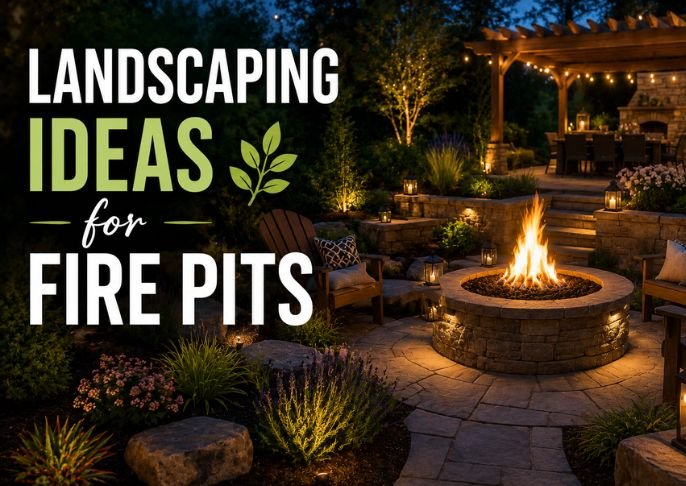
Backyard Fire Pit Ideas for Landscaping: A Practical Guide
Turning your backyard into an all year gathering space can feel impossible. One of the best options to achieve this is the addition of a firepit. Fire pits can create interesting focal features for your landscaping as they draw people in with their warmth. There are tons of options to purchase or build a fire pit. These can range from a portable fire bowl to a complicated built in stone feature that is plumbed for gas. Here you will find all of the options that are available to you as well as how to price them and integrate them into your landscaping.
Choose the Fire Pit Ideas Before the Style
When considering your fire features, the first choice that has to be made is the structure and the fuel type. This will make a huge difference to the price as well as what your local codes will allow.
Nothing beats the sound and smell of a wood burning fire. This option is often the most affordable and can be a build your own option. The downside of a wood fire are the ashes that must be cleaned as well as an ongoing supply of firewood. In addition, most local jurisdictions have the highest level of regulation for wood burning fire pits. Check local ordinances prior to a permanent build.
Smoke and ash don’t come with gas fire pits (propane and natural gas). They also ignite and extinguish quicker. If you live under wildfire restrictions, have kids or pets, fire pits are a better alternative. Natural gas requires a dedicated line and is more expensive to install, but you’ll have a permanent fire pit that’s better than the expensive, endless refills of propane.
Portable fire pits are good for entry, especially for renters or people who don’t want to commit. Because the fire pit is in a bowl, the fire pit is also easier to move. Most places don’t require permits for these fire pits, but you should check local regulations. Use these fire pits if you want to test the fire pit location on your property.
Landscaping Layouts That Actually Work
Design is only half of the fire pit. How you place the fire pit defines your whole yard.
A buffer zone should be included in your seating arrangement. There should be 3 to 4 feet of empty space around the outside of the fire pit. Getting too close to the fire pit makes the area feel cramped. Too far makes the area feel uninviting.
Gravel, pavers, or a concrete pad provide a hardscape base, even for a portable pit. A hardscape base placed around the portable fire pit protects the lawn from heat and ember damage and gives the area a fire pit design rather than a fire pit placed in the grass.
Fire pits should have layered plantings around the perimeter of the pit and not all the way up to the pit. Plantings should include ornamental grass and low shrub plantings that are pavered a few feet away from the fire pit. These plantings help border the area and also help maintain fire safety. Surrounding fire pits with low, dry, and/or highly flammable plantings should be avoided.
As for safety, a fire pit area should have lighting that supports and does not compete with the area. Lighting can include a pathway of illuminated pavers that leads to the fire pit, and soft, lower illuminated plantings and structures. The area can be further illuminated and help maintain the fire pit’s glow.
Budgeting for a fire pit can be easy
For the more affordable option ($500 and under): a steel fire bowl or a more DIY option can be created. This can be created by a ring of fire-safe bricks that are placed along a gravel base that have a bordered edge of pavers or flagstone. This option can actually be long-term, as many beautifully designed backyards center permanently around a quality portable fire bowl.
The next range ($500 to $3,000): typically includes a small paved area around a built-in fire pit that uses retaining wall blocks or natural stone veneer. This section is generally where homeowners stay if a permanent, professionally completed fire pit is desired, but is not part of a full landscape renovation.
High-end ($3,000–$15,000+): Integrates custom built gas fire pits into patio/outdoor kitchens systems. Features built-in ignition systems and often raised hearths, built-in seating walls, and/or water features. Strongly suggested to hire a landscape designer or contractor here opposed to a DIY.
Safety & Regulation Basics (Don’t Skip This)
This section is where most blogs and magazines poorly address design choices since most consumers care more about selections. You’ll only consider materials for design.
In most cases you should check local regulations before building a permanent structure. Many cities have regulations on wood-burning fire pits. These may require a minimum distance to structures and/or property lines (this can vary from 10 to 25 feet and beyond). Some cities may ban them completely during dry seasons or burn bans.
Clearance from structures and overhangs also matters. Keep any fire pit clear of fences and deck overhangs. It is also a good idea to keep them clear of tree branches. Even if the fire looks contained, the heat may be enough to damage or ignite nearby materials.
Have the fire pit fully extinguished to end the fire. A hose, bucket of sand, or fire pit lid should be near to fully extinguish the fire at any time the fire pit is lit.
Gas installations especially on a natural gas line should absolutely be done by a professional. Go DIY on something else.
Getting the Most Out of the Space
A multi-season fire pit area is a more enjoyable experience. When an area has a break from the wind, it can be much more comfortable and can be a more enjoyable experience. If you have a colder winter climate, a fire pit can be the only feature that keeps a backyard enjoyable after most people have to stay inside. Because of this, fire pits can be some of the most worthwhile landscaping that people can invest in.
FAQs:
1. What is the distance a fire pit should be from the house?
A common fire pit placement distance is 10 feet from a house. However, it can depend on the code, and some places can prescribe a greater distance, especially for wood-burning pits. You should check your local codes when placing a fire pit.
2. Which is better when considering landscaping, a gas fire pit or a wood fire pit?
There really is no better option when considering landscaping for the two fire pits. Gas fire pits can be placed when low maintenance and fire safety is a concern. Wood fire pits can offer a more traditional experience and can be placed when the maintenance is not a concern.
3. Do I need a fire pit permit for my backyard?
A fire pit can require a permit depending on your location, and it can depend on whether the fire pit is movable or built-in. Movable fire pits can be placed without a permit, but built-in fire pits, especially gas fire pits, can require a permit more often. You should check your fire pit requirements with your local building resources.
4. What is the most cost-effective way to add a fire pit to my backyard?
Usually, the least expensive option is a steel fire bowl, or you can spend a few hundred dollars assembling a fire-rated brick ring on a gravel base with a basic paver surround. This will most likely cost you a little extra, but it will not break the bank.
Also Read: What is HRMS Globex (and what is it not)