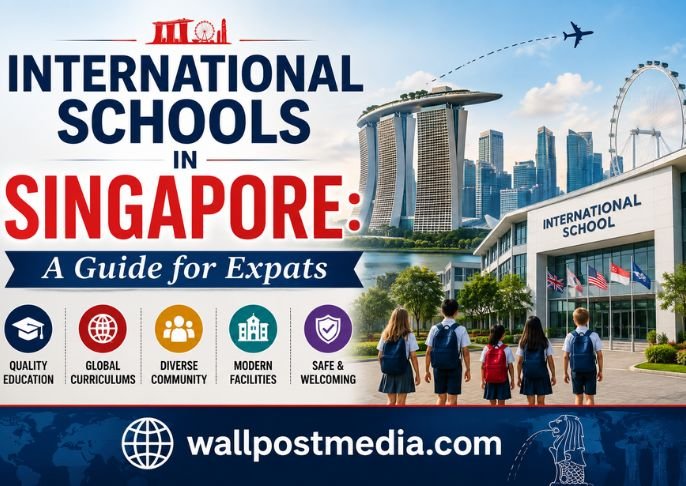
International Schools in Singapore: A Guide for Expats
Selecting a Singaporean International School is typically one of the first things on the Singapore family’s “to do” list. Even before relocating, the number of international schools in Singapore can feel overwhelming, making it important for families to review their options well before arriving. International Schools have different curriculums and different prices. Take your time to think of what best suits your family in the long term.
We based the following information using our sources and current information on deadlines and school fees. The last update was July 2026. Info and school fees change quickly and we try to keep the most accurate information for families relocating.
What Attracts Families to Choose International Schools in Singapore
One of the most convenient things about the International Schools in Singapore is the amount of options, especially in the English speaking world. If relocating again is a high probability, parents can choose schools with curricula that are easily transferable, like the IB. There are several international schools in Singapore that offer A-Levels and IB as well. Schools that offer these programs typically have a strong University placement culture and help support students gain places at universities around the world.
International Schools in Singapore are also easy to get to. One of the major selling points of International School curricula in Singapore is the school’s location. Singapore is a compact city-state, which means that the majority of students have a strong selection of schools in close proximity to their home. Given that most International Schools are English speaking, the transition from school to school is typically easy as well. The schools that choose to promote sports and the arts have solid school community engagement as well.
Main Curricula Offered
When looking at different International Schools in Singapore, you must first consider your child’s education pathway and which curriculum you prefer:
International Baccalaureate Programmes (IB) — To what extent are the three programmes offered (PYP, MYP, and Diploma Programme)? The full continuum IB programmes are increasingly available in Singaporean International Schools and are popular for their international recognition and critical thinking focus.
British curriculum — Typically British International Schools teach the EYFS followed by the IGCSE and A-Levels; often these schools offer the IB Diploma in the later years as an additional option.
American curriculum — Schools provide a US high school diploma, normally WASC accredited, and offer a US high school diploma with Advanced Placements.
Australian curriculum — Smaller number of International Schools offering the Australian curriculum, mainly for the Australian expatriate community.
Indian curriculum (CBSE) — Preserved mainly to those schools that offer the IB in order to cater to the large Indian expatriate population.
Understanding the Fee Structure
Once parents have narrowed down their options, cost often determines the final choice of International Schools in Singapore. Tuition grows year-on-year and increases at each schooling level:
Primary Years: Approx. SGD 27,000-35,000
Lower Secondary Years: Approx. SGD 32,000-42,000
IB Diploma / A-Levels: Approx. SGD 38,000-55,000
Application fee: Approx. SGD 1,000-4,000
“Capital Levy” or “Building Levy”: Approx. SGD 1,000-5,000
School “extras” (uniforms, transportation, and laptops) need to be considered as well.
Some companies offer special relocation packages that cover part or all of these costs. Parents should break down the costs with their HR departments prior to signing a deal with the school.
Choosing a School for Your Child
Picking an International School in Singapore can be a laborious task given there are 60 plus institutions to choose from. Here are a few filters you can apply to help narrow it down.
The first consideration should be the curriculum, not the brand. Some families will not expect to stay in Singapore long term and would prefer their children to be in a British school offering A Levels. A well-regarded IB international school in Singapore would then not be the right fit.
Schools that use the same curriculum do not have the same school culture. Class sizes and facilities can differ from school to school. The only way you will know this is if you have the opportunity to visit the schools.
If you will likely choose a neighborhood based on where you have selected a school, plan for the school’s daily commute in your decision.
Normally, your family will have to receive approval from the Ministry of Education if you would like to go to international schools in Singapore.
A Comparison of Local Versus International Schools
In Singapore, the local schools are good from an academics standpoint and are less expensive, but there are not many spots and the curriculum may not fit with plans for moves abroad. This is the most common consideration expat families have when choosing Sri International Schools over the local MOE system.
FAQs:
1. How many international schools are there in Singapore?
More than 60 international schools operate in Singapore. Schools offer a variety of curricula from the IB, British, American, Australian, and Indian programs.
2. How much does it cost to go to school in an International School in Singapore?
Tuition starts as low as SGD 27,000 in the first years of primary and can exceed SGD 50,000 in the IB Diploma or A-Level years. This excludes levies and one-off application fees.
3. When should I submit my application?
As a general rule of thumb, you should apply 9 – 18 months prior to your target start date. This is especially true for the more competitive schools as well as for the year groups that are longer.
4. Are Singaporean students allowed to go to International School?
They are allowed, but for MOE approval is generally needed, especially for the IGCSE and O-Level. There are exemptions for the IB Diploma level.
5. What’s the most popular curriculum in International Schools in Singapore?
Schools generally offer either the International Baccalaureate or the British curriculum. There are also schools with an American, Australian, or Indian curriculum.
Read More: Cloud Optimization on Wallpostmedia com | Cut Costs