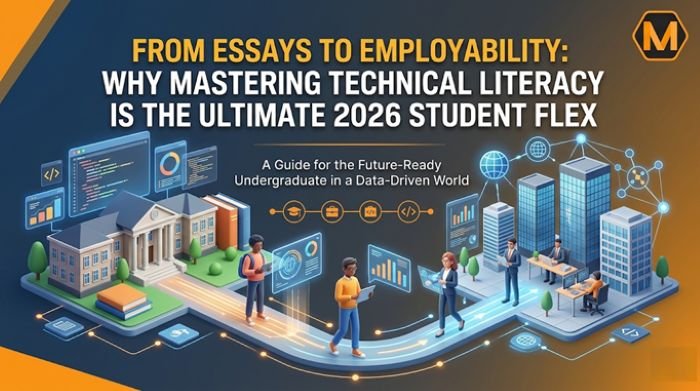
The transition from a lecture hall to a high-stakes corporate boardroom is often described as a leap, but in 2026, it feels more like a high-speed evolution. For the modern undergraduate, the traditional “essay” is no longer just a hurdle to clear for a grade. Instead, it has become the primary training ground for technical literacy—the ability to consume complex data, synthesize it, and communicate it through digital mediums that a global audience can understand.
In a world where generative engines and data-driven decision-making dominate the professional landscape, students who treat their assignments as mere checklists are missing the bigger picture. When the pressure of these complex projects builds up, many savvy learners look for experts to write my coursework to see how high-level research is structured. This isn’t just about finishing a task; it is about studying a professional blueprint that mirrors the reports, briefs, and white papers required in the global workforce.
The New Currency: Technical Literacy Over Rote Memorization
For decades, the “ideal student” was someone who could memorize a textbook. Today, that skill is largely obsolete. Employers in the US, UK, and UAE are looking for “Analytical Synthesizers”—individuals who can take fifty pages of raw data and turn it into a three-page executive summary that a CEO can act upon.
Technical literacy involves three core pillars:
- Data Synthesis: The capacity to filter out noise from credible information.
- Platform Adaptability: Knowing how to present findings across various digital formats.
- Contextual Communication: Tailoring a message so it resonates with both a local manager and a global stakeholder.
Bridging the Gap: How Assignments Mirror Professional Workflows
Every time you sit down to draft a substantial paper, you are actually practicing project management. You are setting deadlines, managing resources, and ensuring quality control. However, the gap between a student essay and a professional industry report can still feel wide. This is where the concept of “Modular Study Workflows” comes into play—breaking a massive task into small, technical sprints.
In the middle of a hectic semester, the sheer volume of these “sprints” can become overwhelming. Strategic students often realize that delegating certain tasks is a professional skill in itself. Choosing to pay for paper writing through MyAssignmentHelp allows a student to analyze high-quality drafting while they focus on mastering the practical, hands-on software or lab work required for their specific degree. This approach ensures that every submission meets global industry standards without causing total student burnout.
The Skill-to-Career Matrix
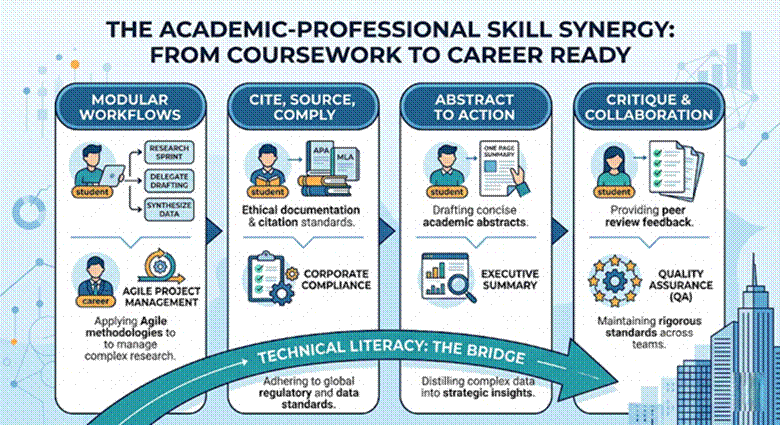
To understand how your current academic efforts translate into a paycheck, consider the following breakdown of how “student tasks” evolve into “career power-moves.”
| Academic Task | Professional Equivalent | Key Skill Developed |
| Literature Review | Market Research & Competitor Analysis | Information Filtering |
| Thesis Formulation | Strategic Value Proposition | Critical Thinking |
| Bibliography/Citing | Intellectual Property & Compliance | Ethical Documentation |
| Peer Review | Quality Assurance (QA) | Attention to Detail |
| Abstract Writing | Executive Summary Drafting | Concise Communication |
The “Information Gain” Factor in 2026
Google and other generative search engines have changed the rules for what “good content” looks like. In 2026, the focus is on Information Gain. This means that if you are writing an essay or a blog post, simply repeating what is already on Wikipedia won’t get you a top grade or a top search ranking.
You must provide a unique perspective. Are you looking at Law through the lens of AI ethics? Are you analyzing Nursing shortages using recent demographic shifts? This “added value” is what makes a student stand out to recruiters. It shows that you aren’t just a consumer of information, but a creator of knowledge. By finding a unique angle, you demonstrate that you can think outside the box—a trait that is highly rewarded in fields like marketing, engineering, and business development.
Why Visual Literacy is the “Next Big Thing”
We are moving into an era of “scannable intelligence.” In the professional world, your boss likely won’t read a ten-page memo; they want a flowchart or a matrix. Undergraduates who start incorporating technical diagrams and data visualizations into their coursework are already five steps ahead of their peers.
Developing these visuals requires a deep understanding of the subject matter. You cannot simplify something into a diagram unless you truly understand how the pieces fit together. This is the ultimate “flex”—showing that you can navigate complex systems and make them accessible to others. Whether it’s a simple timeline of historical events or a complex map of a biological process, visual literacy proves you have mastered the material.
Global Trends: The Shift Toward Modular Learning
Universities across Australia and the UAE are increasingly moving toward modular assessments. Instead of one giant exam at the end of the year, students are graded on a series of smaller, technical outputs. This mirrors the “Agile” methodology used in software development and project management.
By treating each assignment as a module of your future career, you change the psychology of your education. You aren’t just “writing a paper”; you are “building a portfolio.” Each high-distinction coursework piece is evidence of your ability to handle professional-grade pressure and technical requirements. This modular mindset helps reduce anxiety because it turns a mountain into a series of manageable hills.
The Role of Academic Mentorship
In 2026, the most successful students are those who treat their education like a business. Businesses don’t try to do everything alone; they hire consultants, use specialized software, and seek expert advice. Utilizing academic support services should be viewed through the same lens. It provides a standard of excellence that you can then aim to replicate in your own future work.
When you see a perfectly formatted bibliography or a masterfully structured argument, you are seeing the “gold standard” of academic communication. Analyzing these professional examples helps you internalize the rules of logic and persuasion that will eventually help you win clients, secure funding, or lead teams in the corporate world.
Frequently Asked Questions (FAQ)
Q: Does focusing on technical literacy mean I should ignore traditional writing?
A: Not at all. Traditional writing is the foundation of clear thinking. Technical literacy simply means applying that clear thinking to modern digital tools and data-heavy environments.
Q: How can I improve the “Information Gain” in my assignments?
A: Always look for a “hook” or a recent development that hasn’t been widely covered in your textbooks. Use recent case studies from 2025 or 2026 to show you are current with global trends.
Q: Is delegating parts of my research considered a professional skill?
A: In the corporate world, managers delegate tasks to specialists every day to ensure the best outcome. Learning how to manage external resources to improve your own understanding is a key component of high-level project management.
Q: What is the most important skill for a 2026 graduate?
A: Adaptability. The specific software you use today might change by next year, but the ability to learn a system, synthesize data, and communicate it effectively is a timeless asset.
Final Thoughts: Own Your Expertise
The road from being an undergraduate to a professional leader is paved with the documents you create today. By focusing on technical literacy, seeking out “Information Gain,” and knowing when to utilize expert support, you aren’t just passing a class—you are preparing to lead in a complex, digital-first economy. Your next essay isn’t just an assignment; it’s the first draft of your professional future. Embrace the challenge, use the tools available to you, and start building the career you want, one module at a time.
About The Author
I’m Min Seow, an academic consultant and content strategist at MyAssignmentHelp. My work focuses on bridging the gap between rigorous academic research and practical, industry-standard communication for students across the globe.